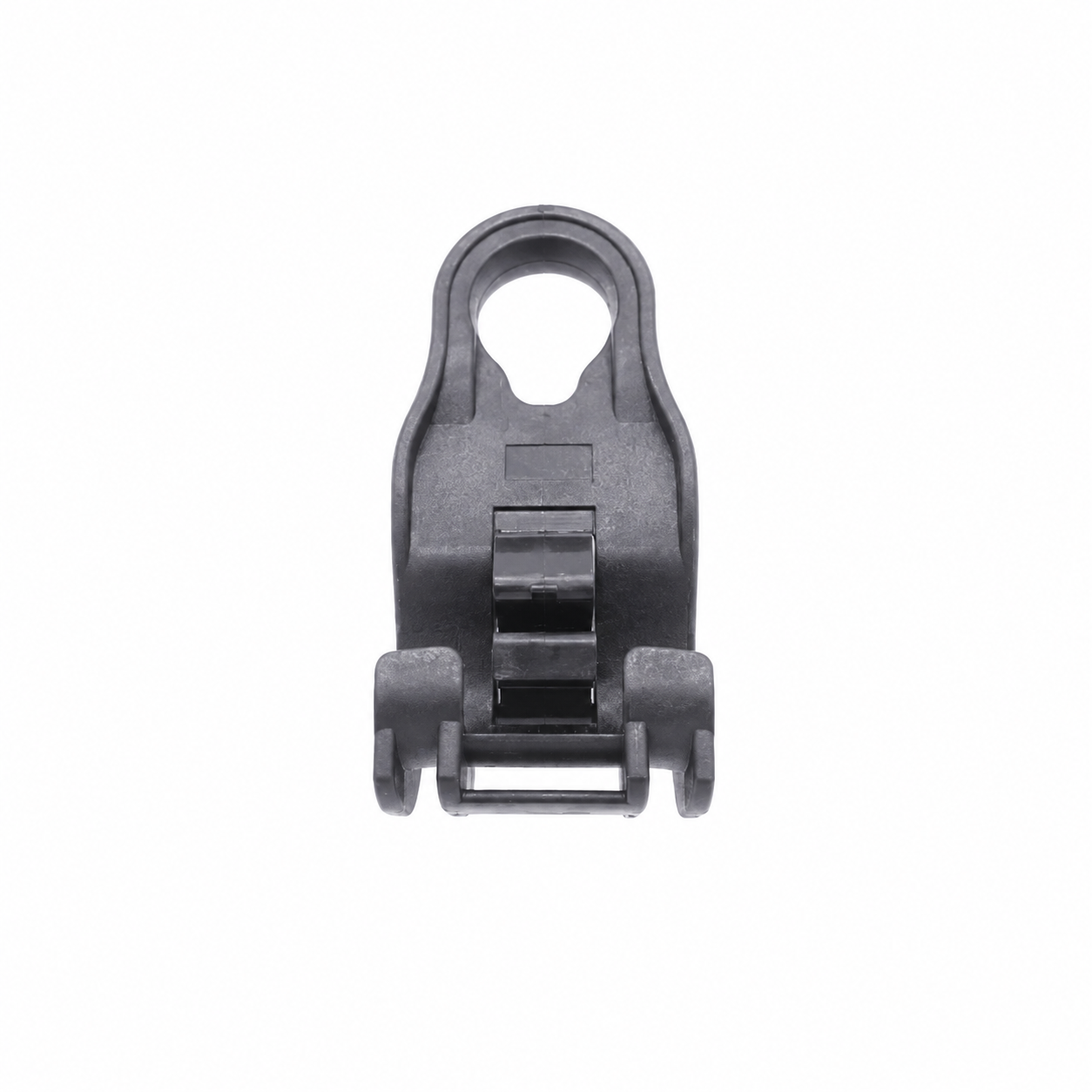
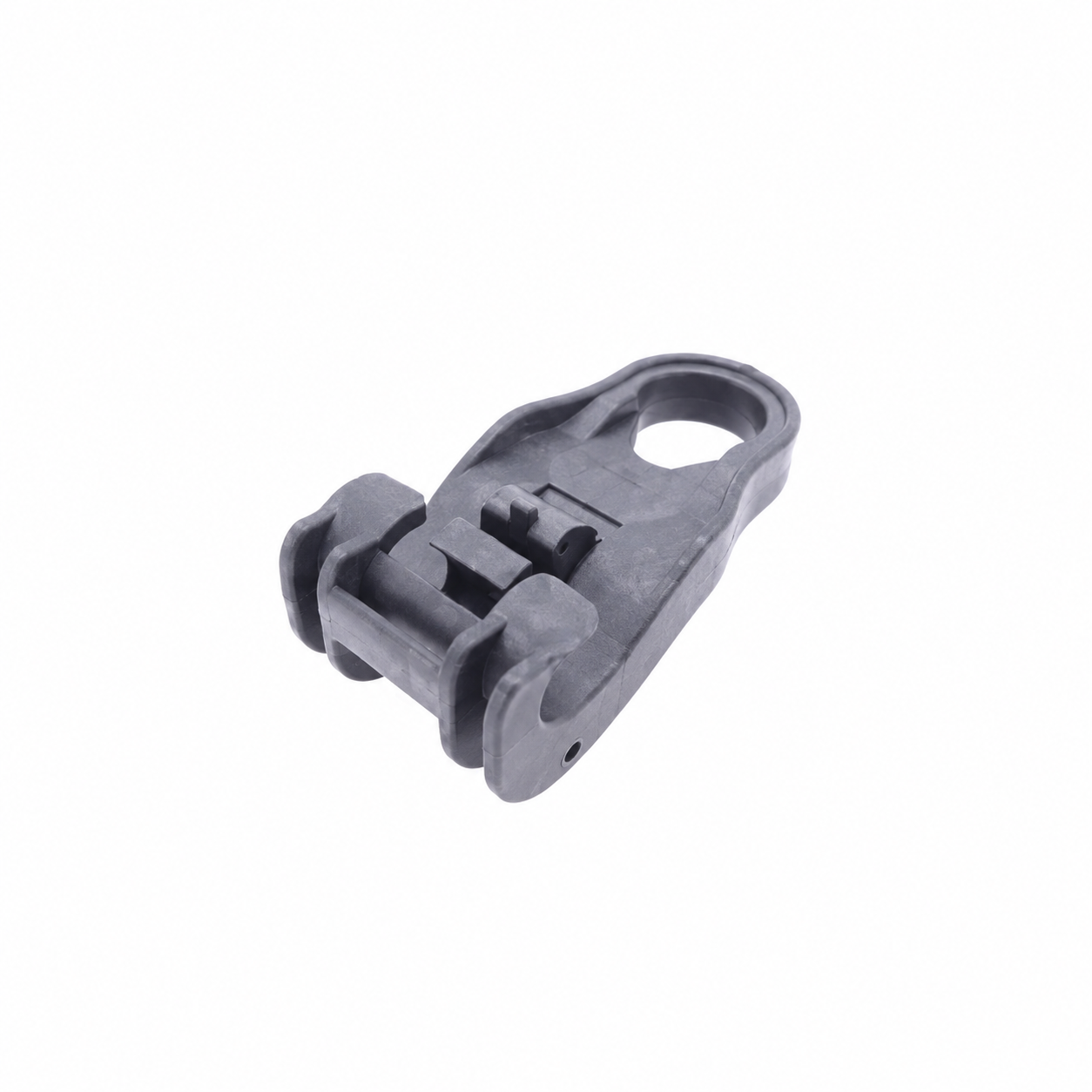
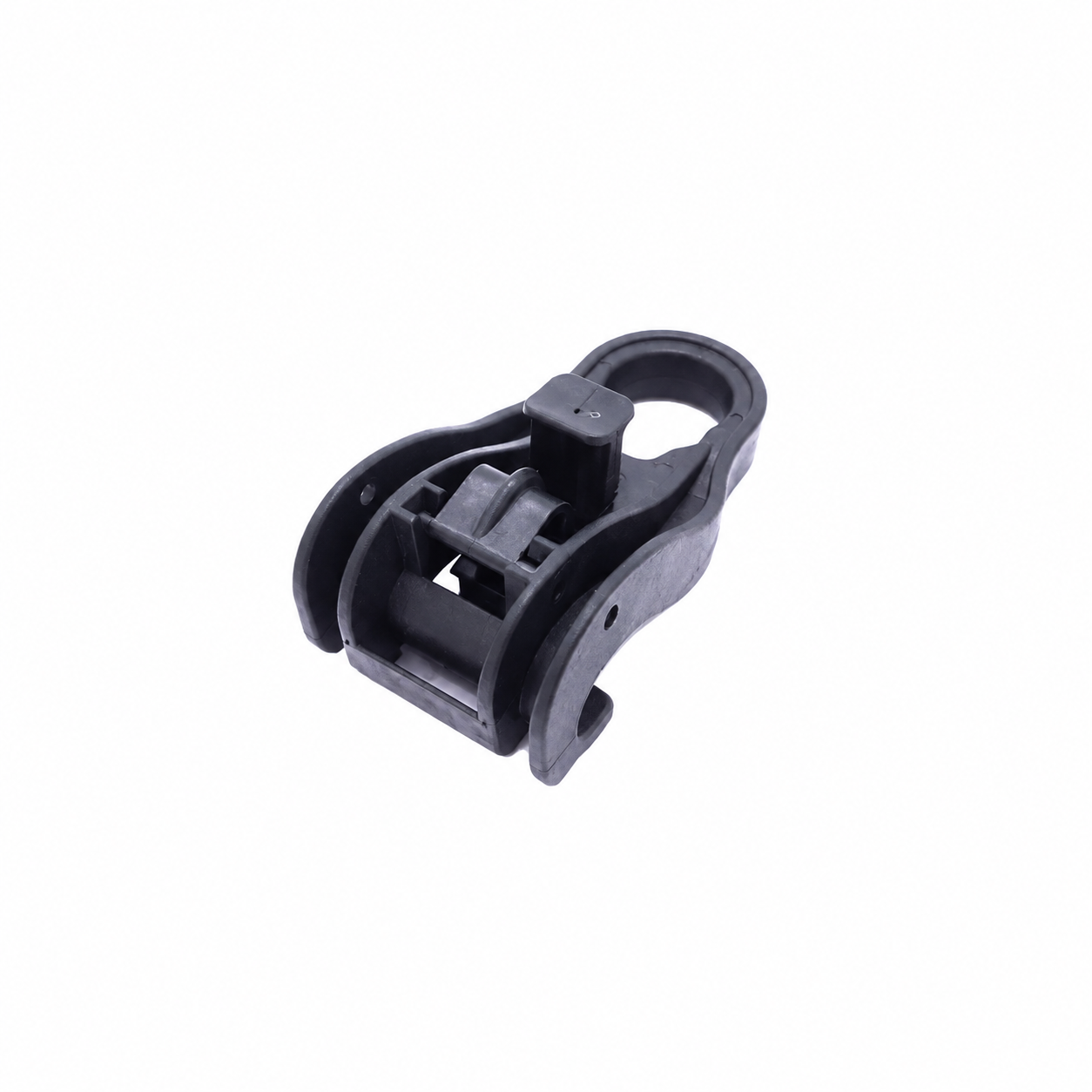

Features
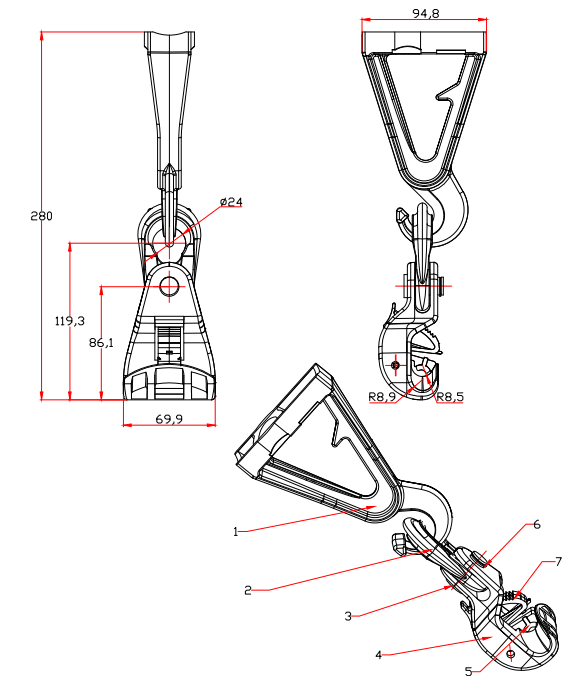

The PS-500 aerial support clamp, also described as PS-ES-500, suspends round ADSS cables or low-voltage ABC cables in outdoor FTTx networks and low-voltage overhead lines.
Application
The PS-500 supports ADSS optical cables at intermediate poles on overhead fiber routes. It is used in FTTH, FTTx, CATV, GPON and metropolitan access networks where correct cable position and sag must be maintained.
The support permits limited movement from temperature changes and environmental loading, helping relieve stress on the cable. Used with pole brackets or hooks, it serves short and medium spans in residential, industrial and rural broadband installations. UV-stable, corrosion-resistant materials are intended for durable outdoor service.
| Product code | Conductor range | MBL,KN | Material |
| PS-500 | 10-95 mm2 | 9 | UV resistant plastic |
Ultimate tensile strength testing evaluates a product’s capacity to withstand mechanical pulling loads. Opposing tensile forces are applied to a specimen until it deforms or fails. The resulting measurements provide information on elongation, yield point, tensile strength and ultimate strength.
Tensile testing is used to assess pole-line suspension clamps, preformed guy grips, ADSS dead-end fittings, stainless steel bands, FTTH drop clamps and tension clamps.
For overhead optical cables and their accessories, endurance testing combines mechanical and thermal loading with oscillating stresses. The applicable test values depend on the requirements of IEC 61284.
Such tests can be conducted before product release and during routine production to assess conformity with the applicable quality requirements.