
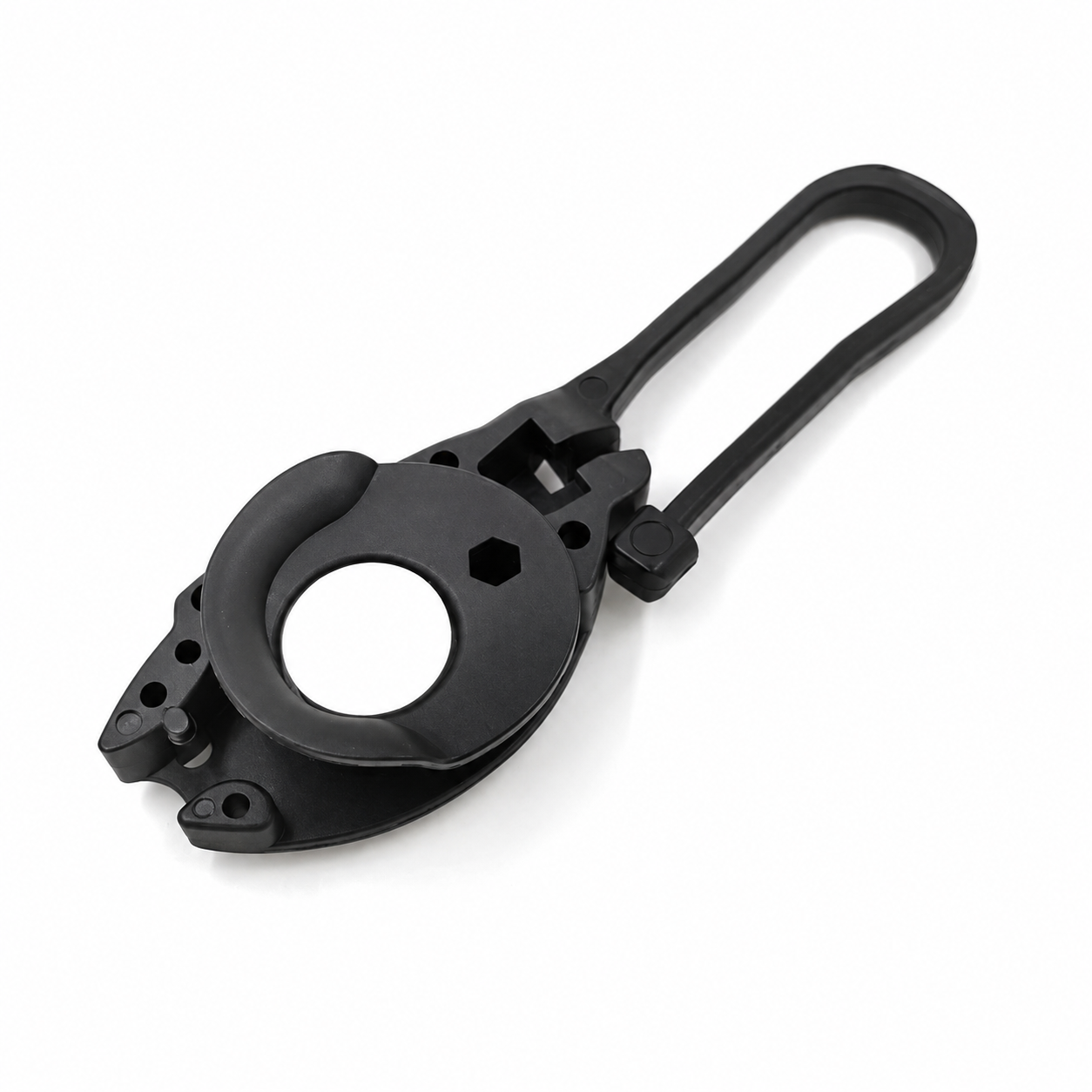
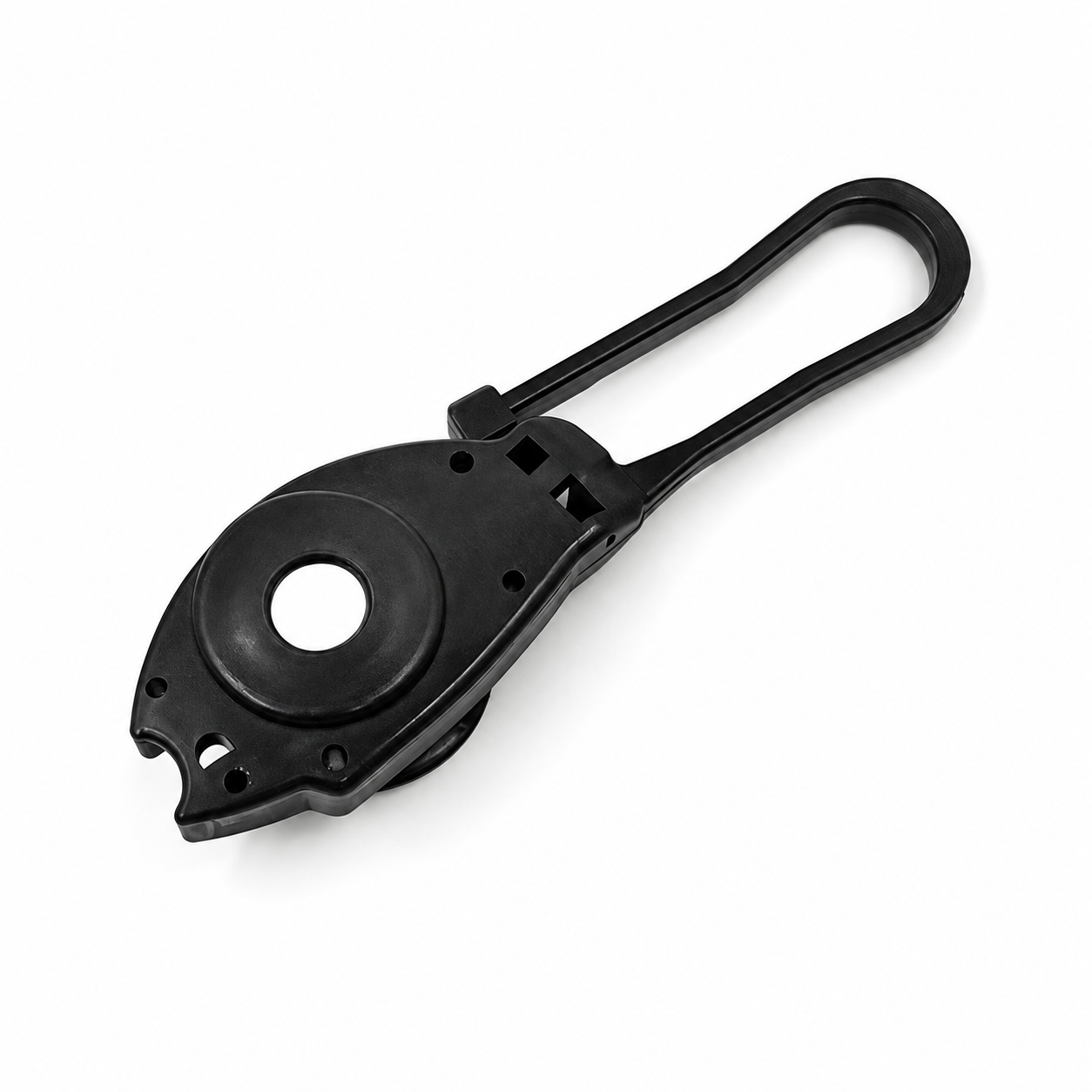
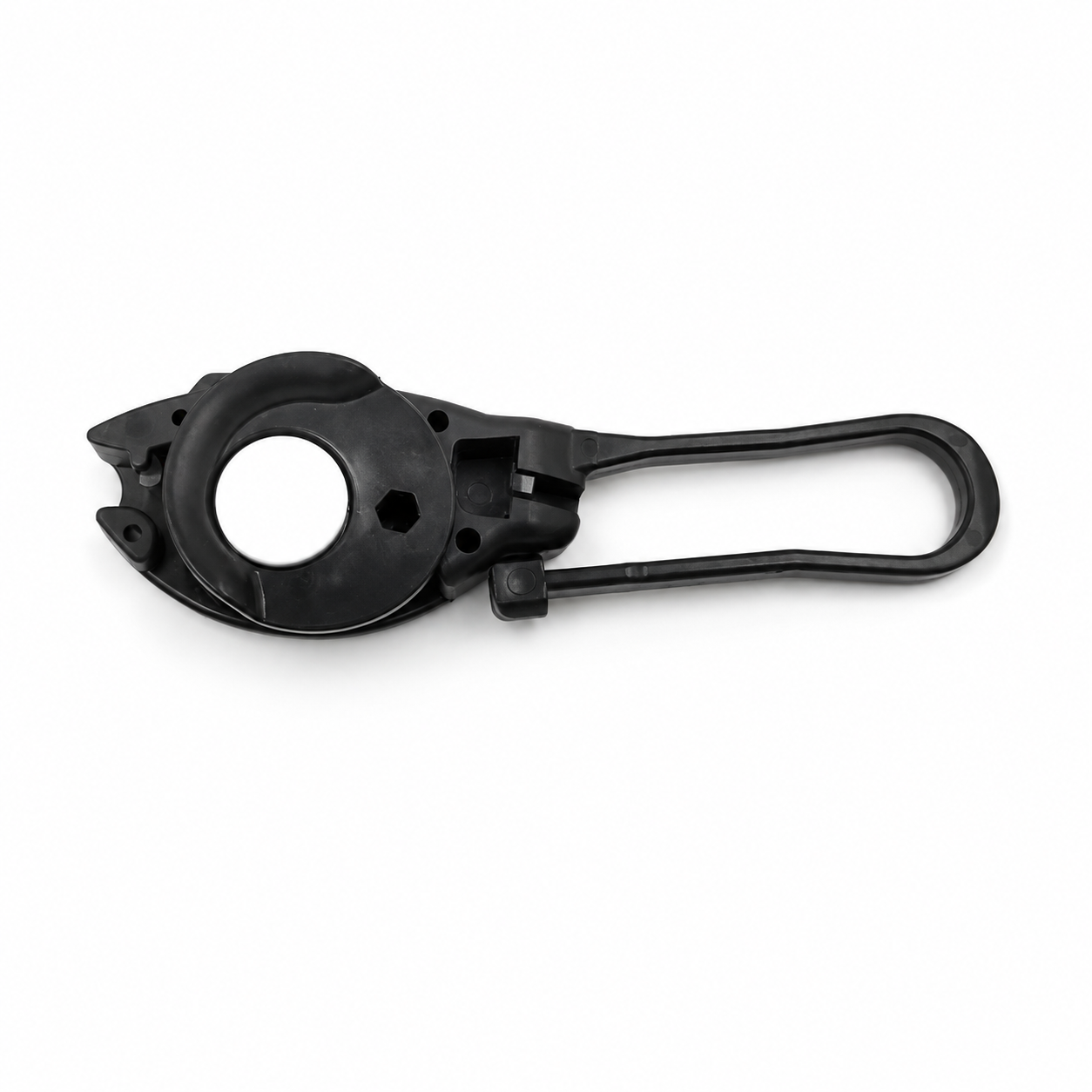
Dielectric Fish-Type Drop Cable Clamp FISH-01
FISH-01 is a fish-type drop clamp for anchoring and supporting flat or round optical cables at dead ends and intermediate points in outdoor FTTH networks.

Features
- Retained-component design helps prevent parts from falling
- Self-adjusting wheel-type gripping mechanism
- Installs without additional tools
- Durable, UV-resistant plastic construction
- Suitable for 2.0 × 3.0 mm flat cable or 2–5 mm round cable
- Specified span range: 30–50 m; minimum breaking load: 1 kN
- Cost-effective support with stable outdoor performance
Application
FISH-01 holds drop cables along the route from a distribution pole to subscriber premises. It is used in residential broadband access, FTTX distribution systems and other aerial telecommunications installations in urban and rural locations.
The integrated clamp incorporates textured cable-contact surfaces to improve grip and resist loosening. It maintains cable retention and tension while limiting damage associated with wind, vibration and outdoor exposure. Suitable installation locations include telecommunications supports and routes between buildings or industrial structures.
| Product code | Flat cable size mm | Round cable size mm | Material | MBL,KN |
| FISH-01 | 2.0*3.0 | Φ2-5 | UV resistant plastic | 1 |
General test method
Ultimate tensile testing measures the load a component can sustain under mechanical tension. Opposing pulling forces are applied until the specimen deforms or fractures. Measurements can include elongation, yield point, tensile strength and ultimate strength.
This method is used for pole-line suspension clamps, preformed guy grips, ADSS dead-end fittings, stainless steel banding, FTTH drop clamps and strain clamps. Endurance testing may combine tensile loading with thermal and oscillating stresses; applicable conditions are selected with reference to IEC 61284 for overhead-line fittings. Such tests can support product qualification and routine production quality control. This description explains the test method; it is not a model-specific test report.