
When comparing preformed vs bolted ADSS clamps, the useful question is not which design is stronger in general. It is which complete assembly is approved for your cable, support position and loading conditions.
First, define what “preformed” and “bolted” mean
In this comparison, preformed refers to helically shaped rods used as part of the cable gripping or supporting arrangement. A bolted mechanical clamp uses a body, fastening arrangement and, where specified, an insert to retain or support the cable.
These are not always mutually exclusive categories. A preformed suspension assembly can also have a bolted housing or bolted connection to the structure. Likewise, a bolted mounting bracket does not tell you how the cable itself is gripped. Ask for an assembly drawing instead of relying on the product name.
Compare fittings with the same duty: dead-end against dead-end, or suspension against suspension. If you are unsure which function you need, read our ADSS tension and suspension clamp selection guide first.
How the two arrangements differ
| Point to compare | Preformed rod assembly | Bolted mechanical assembly |
|---|---|---|
| Cable interface | Helical components surround the cable; protective or reinforcing layers depend on the design. | A mechanical body and specified inserts or liners engage the cable. |
| Selection inputs | Cable construction, diameter range, rod arrangement and required assembly performance. | Cable construction, diameter range, insert selection, torque and required assembly performance. |
| Installation control | Correct matched components, placement, sequence and rod alignment. | Correct component orientation, seating and specified fastener tightening. |
| Space on the route | Check the complete rod length and connection clearance. | Check body size, cable exit geometry and tool access. |
| Span suitability | Must be established for the proposed cable and loading. | Must be established for the proposed cable and loading. |
| Evidence to request | Assembly drawing, compatible cable specification and relevant test results. | Assembly drawing, compatible cable specification and relevant test results. |
Why span length alone cannot settle the choice
“Medium span” and “long span” are useful descriptions, but they are not universal hardware ratings. Define the actual spans and design conditions in your enquiry. The load at a structure also depends on cable weight, sag, wind, ice where applicable, changes in direction and elevation.
Consider two routes with the same pole spacing. One may run through a sheltered area; the other may cross exposed ground or turn sharply at a support. The same spacing does not establish the same fitting duty. The designer’s load schedule is more useful than a generic statement such as “suitable for long spans.”
Manufacturer documentation reinforces this point: published ratings for an individual mechanical ADSS suspension product can change with the specified loading category. Such ratings belong to that particular model and cannot be transferred to another manufacturer’s clamp.
When to evaluate a preformed assembly
A preformed design is worth evaluating when the project specifies a rod-based gripping or support arrangement, or when the cable manufacturer recommends a matched set. The extended contact arrangement can be an important design feature, but it is not proof of suitability by itself.
Check whether the quoted set includes all required reinforcing rods, outer rods, thimbles and connection hardware. Confirm the permitted cable range and jacket construction. Do not mix components from different assemblies simply because the dimensions appear similar.
For a dead-end, ask for the holding performance of the complete set on the specified cable. For a suspension, check support loads, permitted line angle and slip requirements. These checks address different duties and should not be replaced by one generic tensile figure.
When to evaluate a bolted mechanical assembly
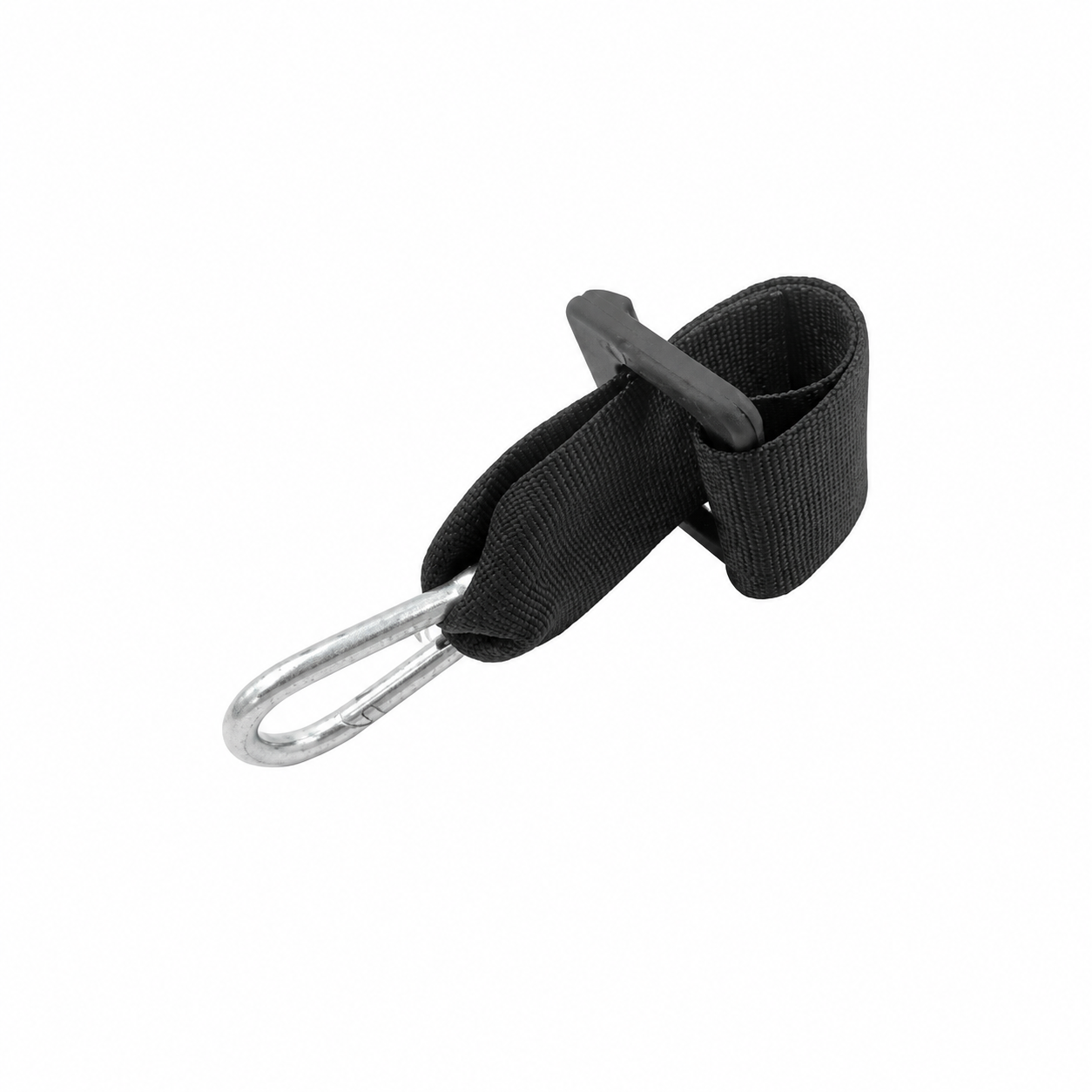
A mechanical assembly can be a practical option when its documented cable range, jacket compatibility and loading limits match the project. A compact arrangement may help where mounting clearance is restricted, but allow enough access for installation and inspection.
Check the insert or liner specified for the cable, the orientation of the parts and the tightening instructions. The presence of bolts does not mean that a clamp can be tightened further to increase its approved capacity. Nor does it mean the fitting is suitable for every cable jacket.
A bolted suspension can therefore be appropriate for some demanding routes, while an unsuitable preformed set can still be the wrong choice. Make the decision from the assembly data, not from appearance or fastening style.
Five checks before approving either design
- Confirm the cable: manufacturer, diameter tolerance, jacket, weight and permitted mechanical limits.
- Confirm the duty: anchoring or suspension, support geometry, design loads and line angle.
- Confirm the assembly: every component, connection dimension and supporting bracket.
- Confirm the evidence: test method, cable used in testing, acceptance criteria and any limitations.
- Confirm installation: instructions, tools, torque where applicable, handling and inspection requirements.
For routes close to power conductors, include the cable manufacturer’s electrical-environment requirements. Vibration protection and any electrical stress-control accessories should be assessed for the route; they are not automatically supplied or made unnecessary by either clamp type.
Compare installed cost, not only unit price
Request quotations for equivalent complete assemblies. A lower price may exclude rods, inserts, attachment hardware or accessories that another quotation includes. Compare installation access, crew familiarity, inspection requirements and replacement arrangements as well as the purchase price.
Use JKTE’s optical cable fittings overview to explore the existing range, then submit the project specification for model review. ADSS and OPGW assemblies are not interchangeable; identify the cable type explicitly.
Frequently asked questions
Are preformed clamps always better for long spans?
No. The suitable option is the assembly validated for the cable and required loads. A general design label is not a performance certificate.
Does “bolted” mean the clamp damages the jacket?
No. Cable protection depends on the approved design, correct components and installation. Incorrect selection or installation can create problems with either arrangement.
Can I reuse either type after removal?
Follow the model-specific instructions. Do not assume rods, inserts, bolts or a complete assembly can be reused without the manufacturer’s approval.
Get a project-based hardware review
Send JKTE the cable datasheet, span and load schedule, support drawings and quantities. Identify whether each position needs an anchor or a suspension assembly so the proposed options can be compared on the same basis.
Technical references: AFL formed-wire ADSS dead-end documentation and AFL mechanical ADSS suspension documentation. These sources illustrate assembly-specific selection; their ratings do not describe JKTE products.