
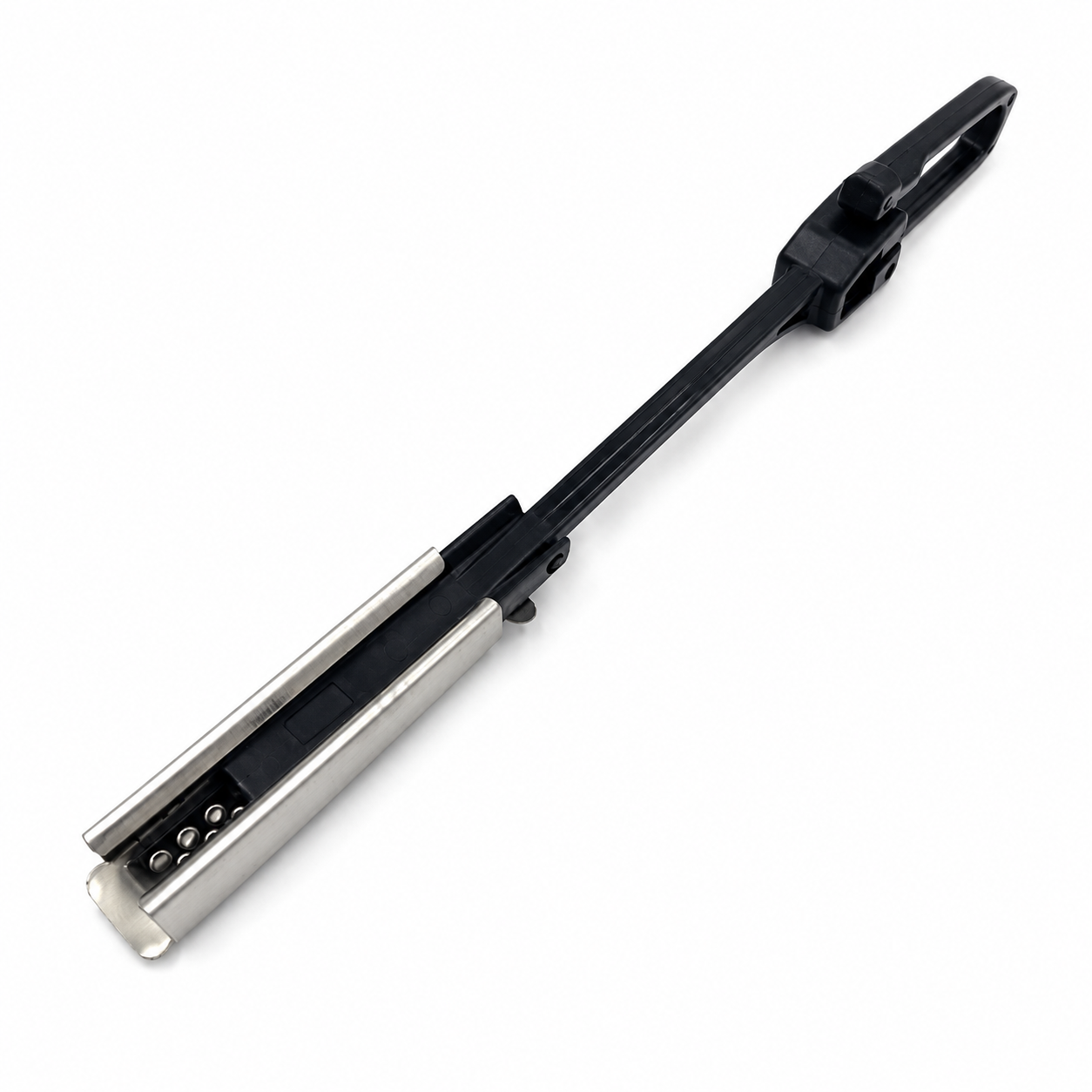
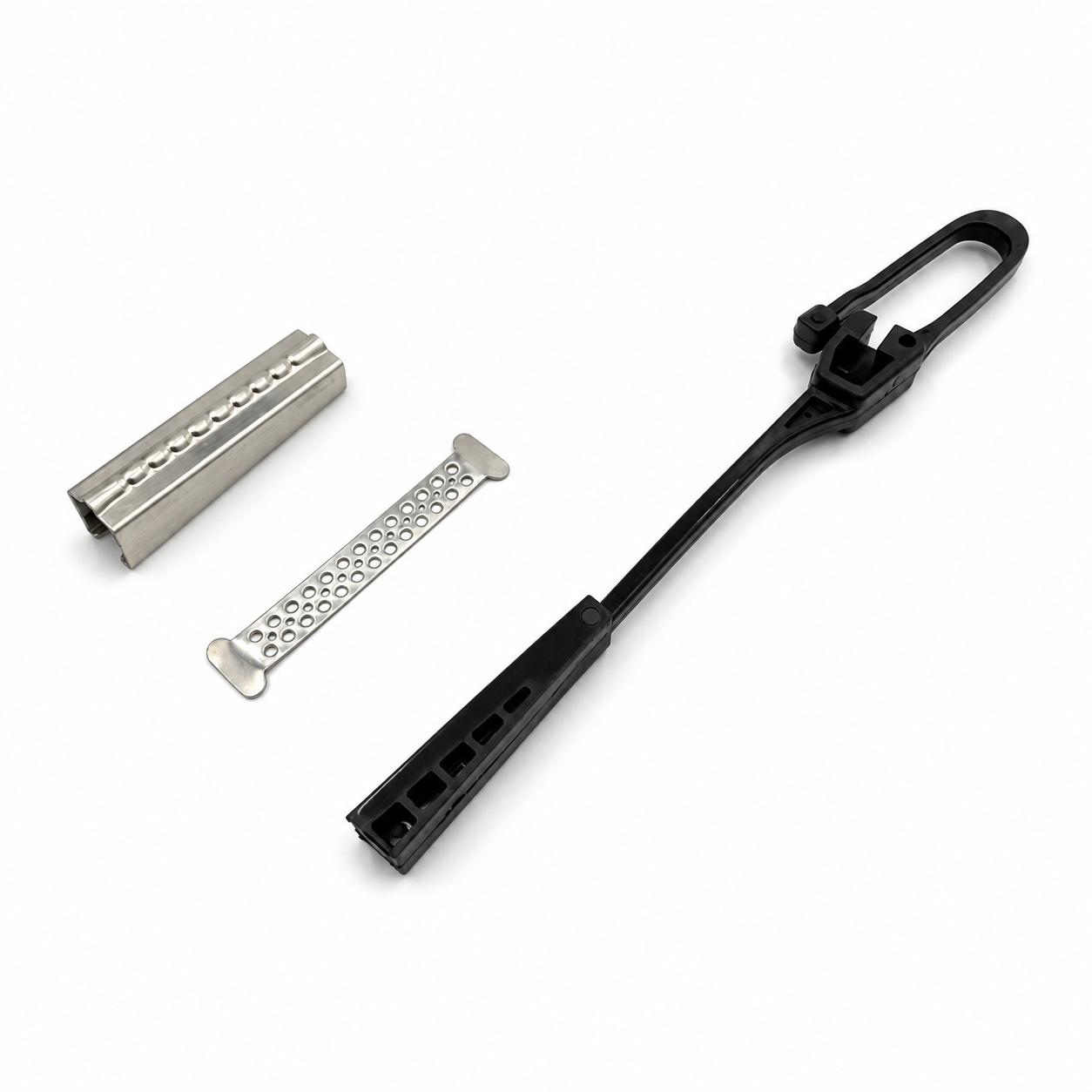
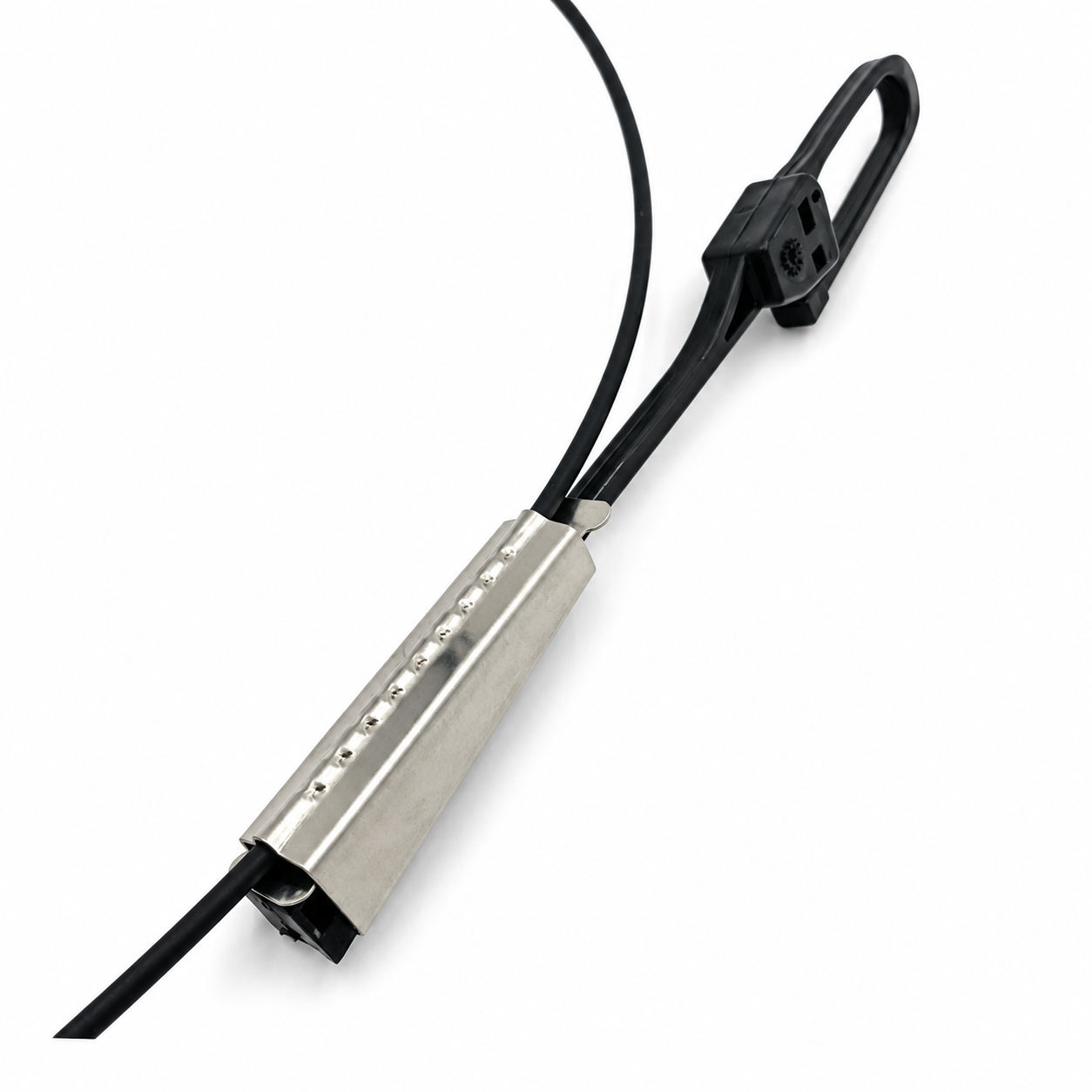
Aerial Drop Cable Anchor Clamp ODWAC-13Y
ODWAC-13Y tensions flat or round optical drop cables at terminal and intermediate points in last-mile aerial fibre networks.

Features
- Fits by hand without additional installation tools
- Accepts both flat and round optical drop cables
- Weather-resistant stainless steel and UV-resistant plastic construction
- Reusable design helps avoid sheath damage
- Embossed shim perforations are specified to increase cable-contact friction by 20%
- Open bail attaches to closed draw hooks or brackets
- Specified span range: 30–50 m; breaking load varies with the cable
- Economical design for stable outdoor operation
Application
ODWAC-13Y secures the overhead drop connection between a distribution point and the end user's premises. It can be mounted on poles, brackets and façades for FTTH expansion, network upgrades and rural connectivity projects.
The clamp assembly uses a gripping channel and textured contact surfaces to resist cable movement. Its metal and polymer components provide mechanical support under wind loading, temperature changes and UV exposure. Select a compatible cable using the dimensions in the specification table.
| Product code | Round cable diameter, mm | Flat cable size (h×w), mm | Material | MBL,KN |
| ODWAC-13Y | 3-6 | 4< × <13 | Stainless steel, UV resistant plastic | Depend on cable |
General test method
Ultimate tensile testing measures the load a component can sustain under mechanical tension. Opposing pulling forces are applied until the specimen deforms or fractures. Measurements can include elongation, yield point, tensile strength and ultimate strength.
This method is used for pole-line suspension clamps, preformed guy grips, ADSS dead-end fittings, stainless steel banding, FTTH drop clamps and strain clamps. Endurance testing may combine tensile loading with thermal and oscillating stresses; applicable conditions are selected with reference to IEC 61284 for overhead-line fittings. Such tests can support product qualification and routine production quality control. This description explains the test method; it is not a model-specific test report.